
Community Member Resources
Community groups and members of the public can use this section of the Hub to learn more about Sites of Importance for Nature Conservation (SINC) reviews and the significance of their designation, where responsibilities lie, and how to get involved. Visit London Wildlife Trust’s Spaces Wild report for a comprehensive overview for all audiences:
Spaces Wild | London Wildlife Trust
Local Plans are key to SINC identification and protection. It is the responsibility of Local Authorities (LAs) to undertake SINC reviews, but engagement from many organisations and individuals, from professional consultants to local members of the community, is essential to the process.
GiGL is the official custodian of information on London’s SINCs and plays a key role in the SINC review process and ongoing data management.
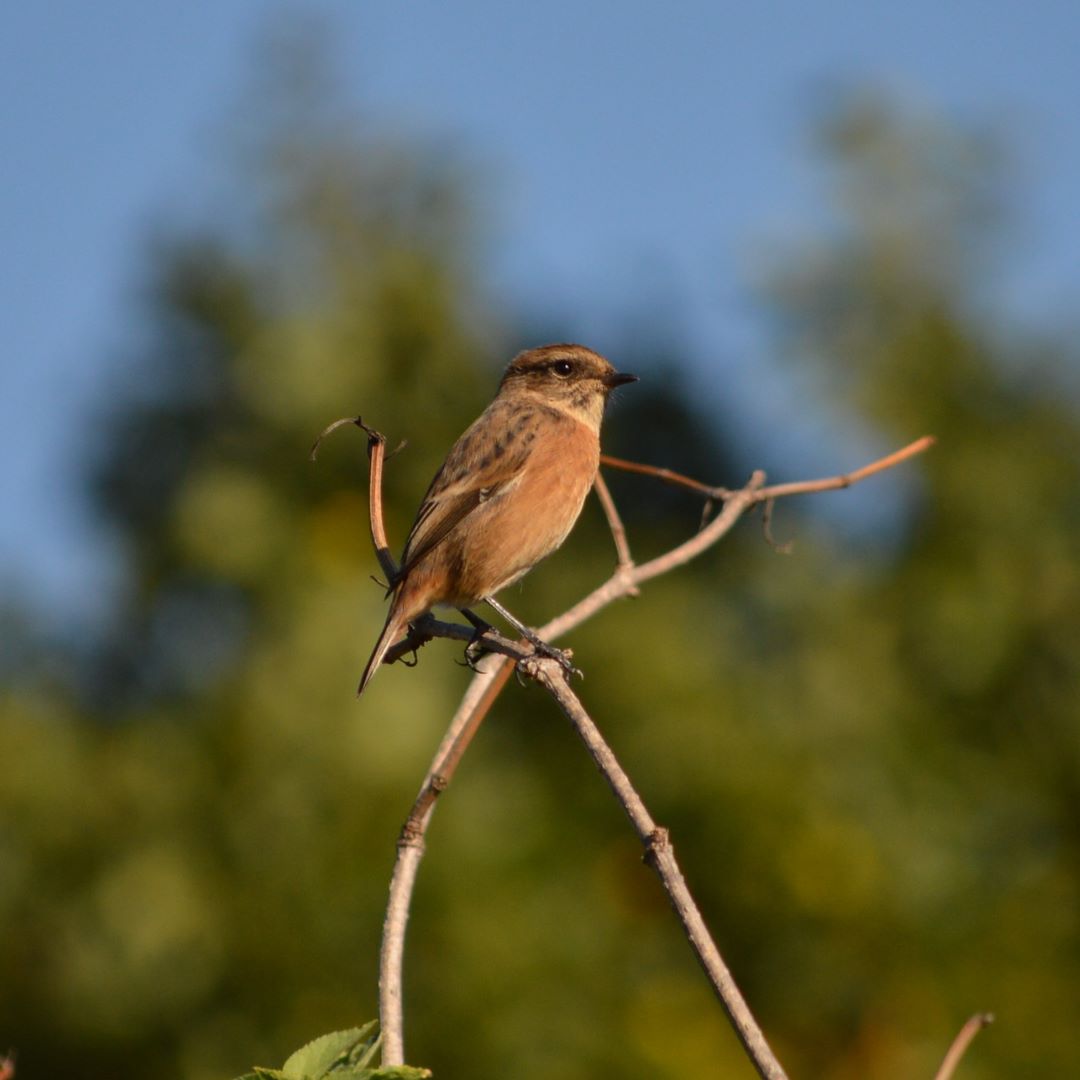
A stonechat (Saxicola rubicola) at Hampstead Heath, a Metropolitan grade SINC © Becky Garden.
SINC Review Timeline


1. Decision to Review SINCs
Local Authorities are responsible for initiating SINC reviews to ensure the current SINCs continue to reflect ecological value and evaluate potential new sites. The process follows the Local Plan process. Take a look at the Local Authority SINC Review Timeline for further details.
Why the SINC review process is important
Designating SINCs helps to protect London’s rare and distinctive habitats and species. The SINC network enhances well-being, offering people opportunities to connect with nature, which is linked to better mental health and childhood development. SINCs also provide essential ecosystem services, such as flood management, urban cooling, and air quality improvement, supporting a more sustainable and resilient city. The understanding, protection and improvement of the SINC network not only benefits biodiversity but also enhances quality of life, making London a better place to live, work, and invest in.
SINC protection, and elements of their protection, such as the protection of important species and habitats, is outlined in policy and legislation (see below).
London guidance, policy & strategy
London Plan 2021 (draft London Plan is in consultation)
Chapter 8: Green Infrastructure. Specifically, Policy G6 Biodiversity and access to nature.
London Environment Strategy (LES) 2018
Appendix 5 provides guidance on the SINC selection, extracted from the previous GLA SINC advice note (2019).
Chapter 5 ‘Green Infrastructure’ proposal 5.2 1a addresses SINCs and London Plan policies relating to SINCs recognising biodiversity and access priorities.
Objective 5.1 and 5.2 provide two quantified objectives relating to the role of the SINC network in protecting priority habitats.
London’s Local Nature Recovery Strategy (LNRS)
Published in 2026, it is recommended that boroughs use the LNRS to align Local Nature Recovery Plans in accordance with individual Local Plan cycles.
London’s Green Infrastructure Framework (LGIF)
A London-wide strategic evidence tool designed to support the planning, delivery and long-term management of green infrastructure. The LGIF consolidates key data into resources to help guide decisions on where and how green infrastructure can deliver the greatest social and environmental value.
Published in March 2026, the LGIF replaces the 2018 GI Focus Map and the 2012 All-London Green Grid.
National guidance, policy & legislation
Planning Policy:
National Planning Policy Framework
Chapter 19: Conserving and enhancing the natural environment.
Guidance:
Local Sites and nature conservation
National guidance on the gov.uk website that sets out how Local Sites (SINCs) are managed, how they relate to national policy and planning, and what Local Sites partnerships do.
Selecting & Managing Local Sites
National guidance on how Local Sites partnerships should select, manage and deselect Local Sites.
Local Wildlife Sites Hub
The national equivalent to the London SINC Resource Hub – an accessible resource for everyone to learn about Local Sites in the national context.
Legislation:
Environment Act 2021
Part 1 Environmental governance, Chapter 1 Improving the natural environment.
Part 6 Nature and biodiversity (BNG & LNRS).
Natural Environment & Rural Communities (NERC) Act 2006
Part 3 Wildlife etc., Section 41 Biodiversity lists and action (England) & Section 40 Duty to conserve and enhance.
Wildlife & Countryside Act 1981
Chapter 8: Informs the assessment of core criteria for SINC designation.
The Conservation of Habitats and Species Regulations 2017
Outlines the Regulations affording internationally recognised protection to rare habitats and species at the European level. Where such designated sites overlie SINCs, greater protection is afforded in the development planning system.
National Parks and Access to the Countryside Act 1949
Informs statutory instruments for Sites of Special Scientific Interest (SSSIs) designations, and of National and Local Nature Reserves (NNRs and LNRs, respectively), which, when overlapping with SINCs, provide greater protection in the planning process.

2. Evidence for SINC Designation
As with the Local Plan process, the initial step of a SINC review is gathering evidence. This will be done by qualified ecologists through desk assessments and on-the-ground surveys of existing and new candidate sites. The ecologists gather baseline reference data from GiGL and guidance on data standards.
Sites are then evaluated against criteria set out in the SINC Advice Note to determine the appropriate grade for designation, based on ecological principles used to determine relative value. Based on the results and interpretation, recommendations to change existing sites or designate new ones are published in a SINC review report.
Community action: Enhancing baseline data
One key way to get involved in the SINC review process is by enhancing the database that ecologists will be accessing for reviews by recording species to GiGL. Recording improves species evidence for sites and offers a great way to connect through events, guided walks, youth nature clubs, or surveys. Apps, spreadsheets or webforms can be used to capture sightings on the spot. Discover the recording methods below and get in touch with a member of our Community Team to discuss how we can help further.
Submit 1-20 Wildlife Records
Regularly Record – using GiGL’s recording spreadsheet
Recording Apps
Regular recording ensures that measures for species richness and rarity (two of the SINC designation criteria) are improved and as up-to-date as they can be for sites. Some species records can also act as indicators for important habitats.
Important habitats & species
Species and habitat richness and rarity are key criteria for SINC designation, protection and management. Certain species and habitats are protected at both local and national levels, with some protections being legal and others non-legal but still significant. While GiGL receives data for all species, not just those of conservation concern, the lists below can help individuals explore designations and support those interested in recording.
Species designations
- A list of legal designations affording species protections, as well as other notable (non-legal) designations.
Species Lists – follow this link to access the below resources:
- Greater London and Middlesex Axiophyte List: A list of plant species which are indicators of habitats of interest for nature conservation.
- London’s LNRS Focus Species Longlist: Created as part of the steps to developing the capital’s Local Nature Recovery Strategy. The spreadsheet includes information on the primary habitat and practical measures deemed important for the recovery of each focus species.
- London Invasive Species: Invasive non-native species that are cause for concern and a potential threat to the value of London’s natural environment.
- London Priority Species: London’s priority species are those species we share our city with that are national priorities for conservation and those that are believed to be declining in London or beyond.
London’s Biodiversity Action Plan
- The archived London Priority Species and Habitat Action Plans created by the London Biodiversity Partnership (now dissolved) can also be a useful resource, though some of the information may be outdated.

3. Consultation
Recommendations will be presented to a Local SINC Panel to help guide the borough’s approach and site recommendations. After this stage, proposals will move to wider public consultation under local planning Regulation 18. They may also be added to GiGL’s proposed SINC (pSINC) dataset and can then be reviewed by the London Wildlife Sites Board (LWSB).
Regulation 19 is the final draft of a Local Plan before it is submitted to the Secretary of State for examination. This process is known as the examination in public. During this stage, the public can again submit feedback to help the inspector determine whether the proposals should proceed as they are or require modifications to meet legal and policy requirements.
Local SINC Panel
A Local SINC Panel is a time limited task and finish group that should be established to help identify which sites should be included in a review and to evaluate the recommendations in a local borough context. In the case of a partial review, the local expertise of the Panel will support prioritisation of sites to be surveyed, for example by highlighting non-SINC sites that should be included because of species or habitats they support.
The SINC Advice Note requires boroughs to establish a local panel, and it is the responsibility of the LA to convene one. Existing forums and partnerships should be used where established, such as Local Biodiversity Partnerships, to avoid duplication. Suitable participants for a Panel would include:
- Acknowledged local natural history experts (e.g. council ecologists or London Natural History Society members).
- Local wildlife group leads (e.g. local bat group, bird groups)
- eNGO leads actively working in the Boroughs
- London Geodiversity Partnership members
The chair of the group could be the Borough Biodiversity lead, or a member of the group voted in, determined by the panel’s terms of reference.
Public consultation (Regulation 18 & 19)
To engage in public consultations, keep an eye on your Local Authority website via their consultation or Local Plan webpages. Visit Planning Aid for London or Planning Aid England for more information about when and how to get involved:
Planning Aid for London
When should you get involved in Local Plans? | Planning Aid England
If you are concerned about recommendations and would like to submit a consultation response supported by evidence, GiGL can assist with the provision of data summaries, information and advice to community members. Find out more:
Accessing GiGL Data | SINC Resource Hub
London Wildlife Sites Board
Proposed changes are also reviewed by the London Wildlife Sites Board (LWSB). The board provides expert and independent advice on the review process and should be consulted on SINC reviews and proposed changes.
London Wildlife Sites Board
Proposed SINCs (pSINCs)
Once recommendations have entered public consultation as part of local planning Regulation 18, they can be entered into GiGL’s proposed SINC (pSINC) dataset. These proposals have not yet been officially adopted within a Local Plan. There can be a long gap between SINC reviews and official adoption, so GiGL have established this pSINC dataset to allow these sites to be shared with GiGL stakeholders to benefit their conservation.
GiGL pSINC Timeline

4. Adoption
Any final decisions are made regarding changes to SINC designations and they will be considered officially adopted when the final Local Plan has been published. At this stage they can be entered into GiGL’s SINC dataset.
Data access for community members
Whether you’re interested in discovering SINCs near you or concerned about their management or a potential development near a SINC, GiGL can support you by providing data, information, and advice. Find out more:
Accessing GiGL Data | SINC Resource Hub
Members of the public can view and learn about all publicly accessible SINCs on GiGL’s online interactive map, DiscoverLondon, while local community groups and members of the public can request bespoke outputs from GiGL, including community data reports to view further information for no charge. Contact a member of GiGL’s Community Team to discuss.
What adoption means for Areas of Deficiency
SINCs are collated from LPAs and their boundaries and citations processed and standardised by GiGL. Areas of Deficiency (AoD) in Access to Nature are areas where people have to walk more than one kilometre to reach an accessible SINC of Metropolitan or Borough Importance. GiGL will calculate and update AoD based on SINC changes and any consequential changes to site access. These data can then be made available for decision making and research via GiGL’s products and services.
Areas of Deficiency in Access to Nature
SINC protection
SINCs are afforded protection from development or incompatible land uses within the planning system. This is a non-statutory designation, meaning that SINC status alone doesn’t protect an area by law. However, national policies such as the National Planning Policy Framework (NPPF), as well as regional strategies such as the London Plan (Policy G6), helps to ensure that impacts on SINCs are avoided, mitigated, or appropriately compensated for through the planning process.
Many SINCs also overlap with statutory nature conservation designations (protected by law), which convey greater protection. In London, these include:
- 158 Local Nature Reserves
- 3 National Nature Reserves
- 3 Special Areas for Conservation
- 2 Special Protection Areas
- 2 RAMSAR sites
- 37 nationally designated Sites of Special Scientific Interest (SSSI)
Head to the glossary to find out about each designation:
SINC Resource Hub Glossary
Community resources
Many SINCs are managed with the help and commitment of local people. If you would like to get involved with your local site, you can find local Friends Groups and resources here:
Resources for Volunteers & Community Groups | Parks for London
Find a Friends of Group
Additional Support & Resources
Further links & articles:
National Local Wildlife Sites Hub
Parks, green spaces and biodiversity | London City Hall
Spaces Wild | London Wildlife Trust
Areas of deficiency explained | GiGLer Newsletter
The importance of high quality natural spaces for well-being by Dr Sarah Knight | GiGLer Newsletter
Accessing Wildspace | GiGLer Newsletter
Updating GiGL’s Areas of Deficiency | GiGLer Newsletter
Glossary
Explore key terms, acronyms, other land designations, and policies commonly referenced on the Hub, with clear explanations for quick understanding.
General resources for SINC management
Visit this page for an overview of organisations that manage SINCs and support their conservation. Discover key resources to aid SINC management.
Community Member Frequently Asked Questions
Follow this link to discover answers to commonly asked questions from community groups and members of the public.
Discover London’s Publicly Accessible SINCs:
Below is a map of all publicly accessible SINCs, please note this is not a comprehensive map of the SINC network. To access further information, please visit the ‘Access SINC Data’ webpage above.