
Welcome to your six-monthly roundup from the GiGLer newsletter. In this winter edition, we bring you our species recording highlights, GiGL news, recent newsletter features, and a look to what’s coming up in the months ahead.
The last half of 2025 was a busy one. For the GiGL team, this meant knuckling down to upload vast numbers of records, enhancing our services, and attending events and conferences – all while continuing to deliver requests and stay connected with our stakeholders. Read on for your essential recap in this winter editorial.
GiGL News
We kick off this edition with some news from the team. You may have spotted a familiar face, Clara, who has returned to GiGL as a Data Assistant. Clara will be supporting vital data uploads and services across all teams. To find out more about Clara, you can read her staff interview from her first stint as a GiGLer. We’re delighted to have her back on board!
We’re very pleased to share some wonderful news from Amy, a long-standing member of the GiGL team and former GiGLer editor. Amy is expecting a new arrival in March and will be taking six months of maternity leave. We’re thrilled for her and wish her all the best as she begins this exciting new chapter!
In other news, in November the team travelled to the National Biodiversity Network Trust (NBN) Conference, where we were proud to receive the John Sawyer Open Data Award. It is awarded to those making a valuable and sustainable contribution to open biodiversity data in the UK. You can read more about this recognition, and why GiGL received it, in our recent GiGL News Brief here.

Finally, we’re excited to announce the date – and launch of ticket sales – for London Day of Nature 2026, which will take place on 9th May. After taking a year off to plan and re-think the event, we’ve decided late Spring is an ideal time to bring our community networks together. We’re anticipating another sell-out year packed with workshops and a diverse programme of presentations from our collaborators across London. To find out more and purchase tickets, visit our LDN event page.
Six-Month Recording Roundup
An impressive 1,447,529 records were added to the GiGL database over the past six months, bringing our total number of records to 12,260,089! These newly added records don’t all represent recent sightings. This substantial increase is largely due to a major upload of bird records from 2022 and 2023, kindly shared by the London Natural History Society (LNHS).
More than 67,000 of these records were actually detected between July to December, with further data still awaiting upload. Below are some photo highlights from records submitted via our one-off recording webform:


Newsletter Highlights
Making Data Accessible for Good
We kicked off Issue 38 of the GiGLer by exploring how GiGL helps make data interpretable, accessible, and useful. This includes not only GiGL’s own data, but also how we integrate datasets from across sectors to build a deeper understanding of London’s environment. When data brings together multiple themes rather than a single focus, it becomes a powerful tool for unlocking insights. Over the years, the GiGL team has drawn on a wide range of external datasets to support the production of high-quality outputs, and this article showcased that work in action. Providing useful data and collaborating with partners reflects our social enterprise status and purpose, ensuring a better informed London.

Read here – Combining GiGL Data with External Data to Meet Your Information and Answer Needs
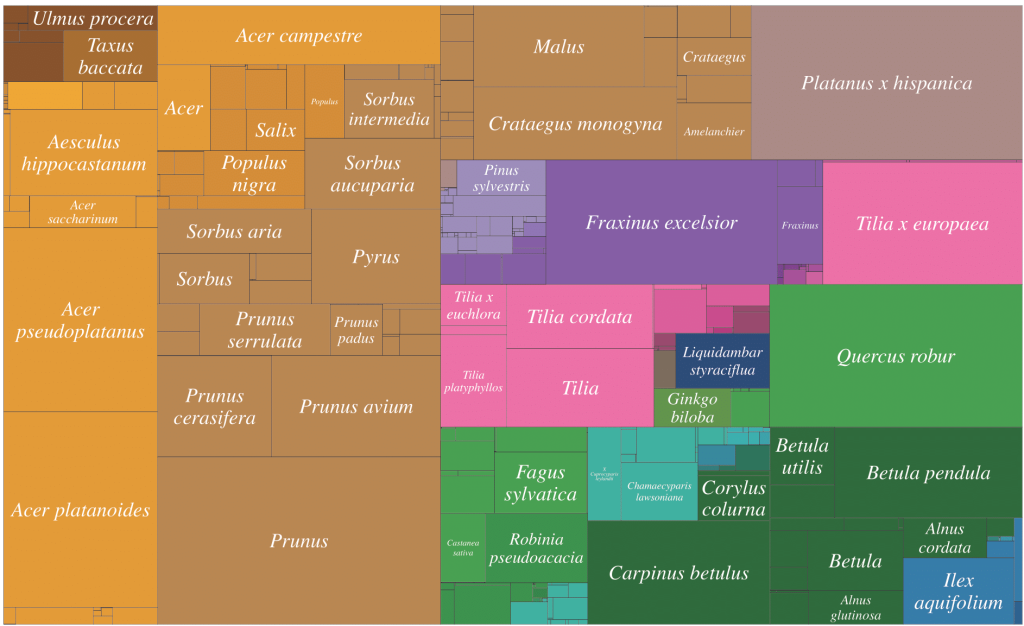
Another recent article highlighted the impact that robust data can have on research. The newly released Public Realm Tree Map, which GiGL helped compile and produce in partnership with the Greater London Authority (GLA), has already contributed to new research exploring the suitability of tree species for London’s environment. Kevin from the Urban Tree Lab guided us through this analysis, which is likely to play an important role in shaping London’s urban forest in the years to come.
Read here – The Use of Data in Tree Selection for the Future
Our recent Issue also featured a pair of related articles focused on bridging gaps in data sharing. First, a long-term partner at Lambeth Council highlighted how they are encouraging residents to submit species records, demonstrating how local authorities can successfully engage communities with nature and deliver the many benefits that come with it. Lambeth is one of many of our partners who recognise the importance of sharing data with GiGL for onward use in planning, projects, and conservation – though there definitely remains scope for improvement across sectors.
Read here – Just for the Record! People Power in Capturing and Providing Ecological Information

This led neatly into a second article on data sharing, this time focusing on smaller ecological consultancies. While it is still uncommon for consultancies to share data, those featured in the article demonstrated how submitting records benefits both their work and the wider environment. Without data sharing, valuable survey results may be used once and never again. These contributors encouraged other consultancies to follow suit, highlighting data sharing as both good practice and good for nature.
Read here – Bridging Gaps for Better Data – Sharing from Development
Incredible Invertebrates
We were happy to accommodate a number of invertebrate-focused articles over the past few months, celebrating everything from iconic species to the weird and wonderful.
The series began with a fitting tribute to our late friend and dedicated urban ecologist Mathew Frith, an advocate for the humble stag beetle. While many people encounter stag beetles in London, they can appear quite intimidating if you’re unfamiliar with them. In 1997, Mathew launched the stag beetle recording survey to capture those curious – and sometimes alarming – encounters reported by the public. The survey continues to this day and remains one of Capital’s most popular species recording initiatives. Our article explored the survey’s history and highlighted why stag beetles have become such an important London icon.
Read here – A Staggering Result


We also featured an article from a charity we worked with in 2025 to provide analysis and statistics to support their research. Pollinating London Together works in the City of London to inspire individuals, community groups, and organisations to create space for pollinators. From planting nectar and pollen resources to creating hoverfly lagoons and bee banks, their work has boosted pollinator numbers in urban areas, while helping people appreciate the value of these species. The charity will soon be using GiGL stats to investigate what drives pollinator abundance and diversity in London, so watch this space for updates.
Read here – Creating Space for Pollinators in London
Turning to the weird and wonderful, November saw the launch of London’s first-ever survey of the German hairy snail (Pseudotrichia rubiginosa). Led by Citizen Zoo in partnership with several organisations, the project was supported by GiGL through data mapping and survey assistance. This rare species is associated with very specific habitats, and improved understanding of its distribution could see it emerge as another iconic London invertebrate in years to come.
This news gained traction across London’s media, from various newsletter publications to BBC News and The Guardian. It demonstrates how collaborative efforts can successfully make an impact for a small and relatively unknown species and it’s habitat, as well as inspire and engage those discovering it!
Read here – Mapping London’s Hidden Molluscs: The First Pan-London Survey for the German Hairy Snail
Last but not least, in November we added important new strategic datasets to our data search reports, as part of our ongoing work to make them as useful as possible for users. This update included Buglife’s Important Invertebrate Areas and B-Lines. To accompany the release, Jamie Robins from Buglife kindly contributed an article explaining how the Important Invertebrate Areas data were developed, how they can be used, and why these sites are so significant for invertebrates. This article complements a similar piece on B-Lines published in 2023.
Read here – London’s Important Invertebrate Areas


The Next Six Months
As 2026 progresses, we look forward to sharing more insights from our collaborative work across London and beyond. This will include news and updates from the London Local Nature Recovery Strategy (due to be published soon!), which we have worked on closely with the GLA over the past few years. We also plan to highlight our national collaborations, including work with organisations such as the Association of Local Environmental Record Centres (ALERC) and the NBN, and their member organisations. As always, we’ll continue to showcase the contributions of recorders and community groups, with upcoming articles expected from Wild Chiswick and the LNHS.
Alongside this, we’ll keep you updated on developments to our services, including enhancements to data search reports and innovative outputs from our partner work. Looking ahead, we’re also excited to be planning a GiGL website redevelopment later this year, which will help make the wealth of information we provide clearer, more accessible, and easier to navigate.
Thank you for staying tuned to the GiGLer over the past six months. We look forward to sharing more with you as 2026 unfolds.