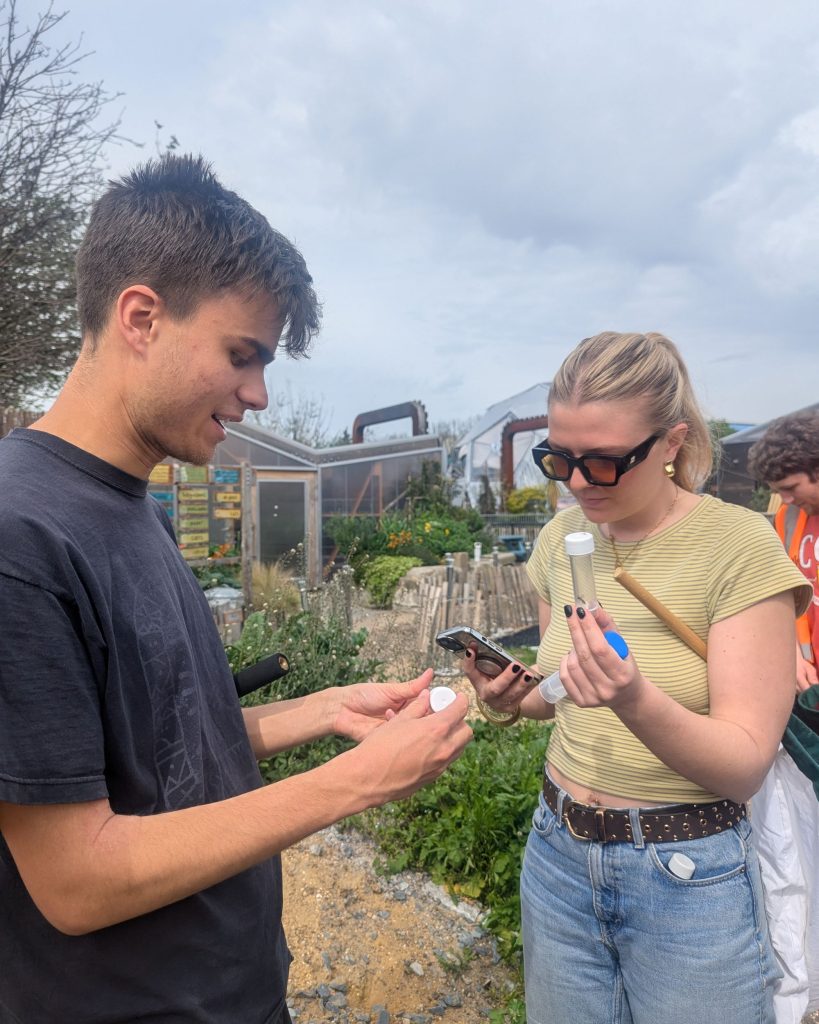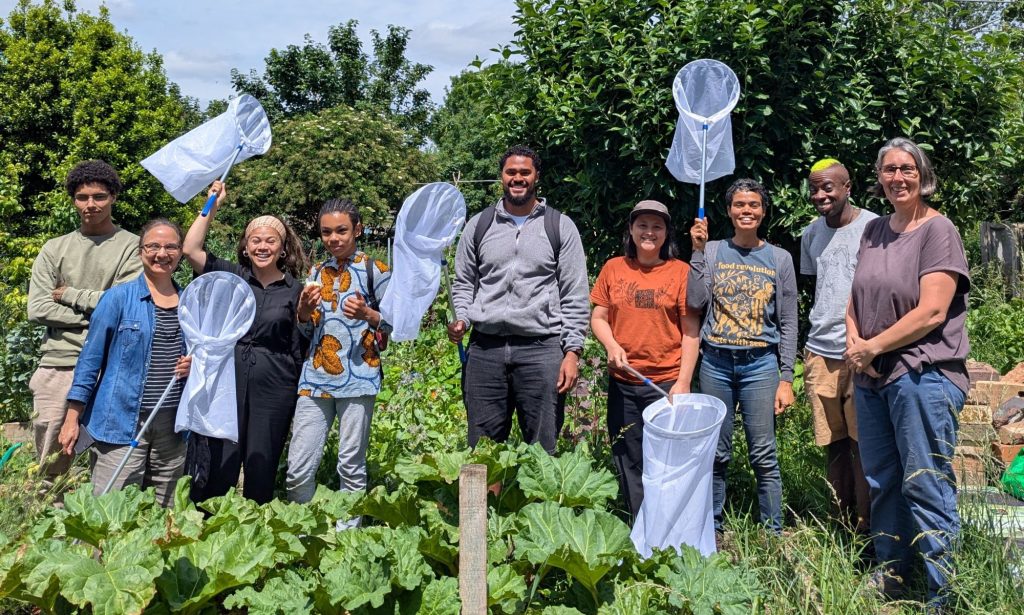
Can you believe more than 82 community food growing groups have been mobilised to record over 1,714 species across London’s community farms, orchards and edible gardens?
Over spring and summer this year, community growers have been recording bugs through Capital Growth’s Big City Bug Hunt, a London-wide citizen science campaign that helps growers identify and monitor wildlife, particularly urban pollinators. As London’s largest network of food-growing sites, with more than 2,000 members, Capital Growth has mobilised growers to create valuable evidence for London’s ecology sector.
Funded by City Bridge Foundation and the Mayor of London, the project aims to demonstrate the crucial role community food growing sites play in urban biodiversity. These spaces are often overlooked in discussions about nature recovery, yet they provide important habitats. By taking part, growers have begun building the evidence needed to put food growing sites on the map as vital ecological oases, which could help unlock funding and influence local policy and planning.
Recording tools
We worked with GiGL to design and pilot suitable recording forms. After testing several approaches, we chose an iNaturalist-based system, utilising the ‘Umbrella Project’ feature, within which a separate project for each garden was created. We felt iNaturalist was most suitable because it is accessible, educational and scaffolds for long-term recording, even for beginners – the user interface is simple and fun to use, built-in features like species information and comparative tools help keep users engaged and the bank of other user’s observations helps new recorders explore what is already around them.
Perhaps mostly importantly, records can flow from iNaturalist to iRecord where GiGL access them. This means the data can be integrated with GiGL’s wider Species dataset to help inform decision-makers. With GiGL’s support, we were also able to advise growers on standards for their iNaturalist accounts and data collection to make their observations as meaningful as possible, such as using a licence accessible to GiGL like CC0 or CC-BY for all records.
A key aim of the project is to engage and educate growers, so we created a suite of tools including workshops, talks and online resources. Throughout the summer, Capital Growth has run training with iNaturalist ambassador Joss Carr at Regent’s Park Allotment and Cody Dock, online identification workshops and webinars with Susannah Hall, and produced free resources including the Big City Bug Hunt toolkit, which is downloadable for free online.
Critter Consultants
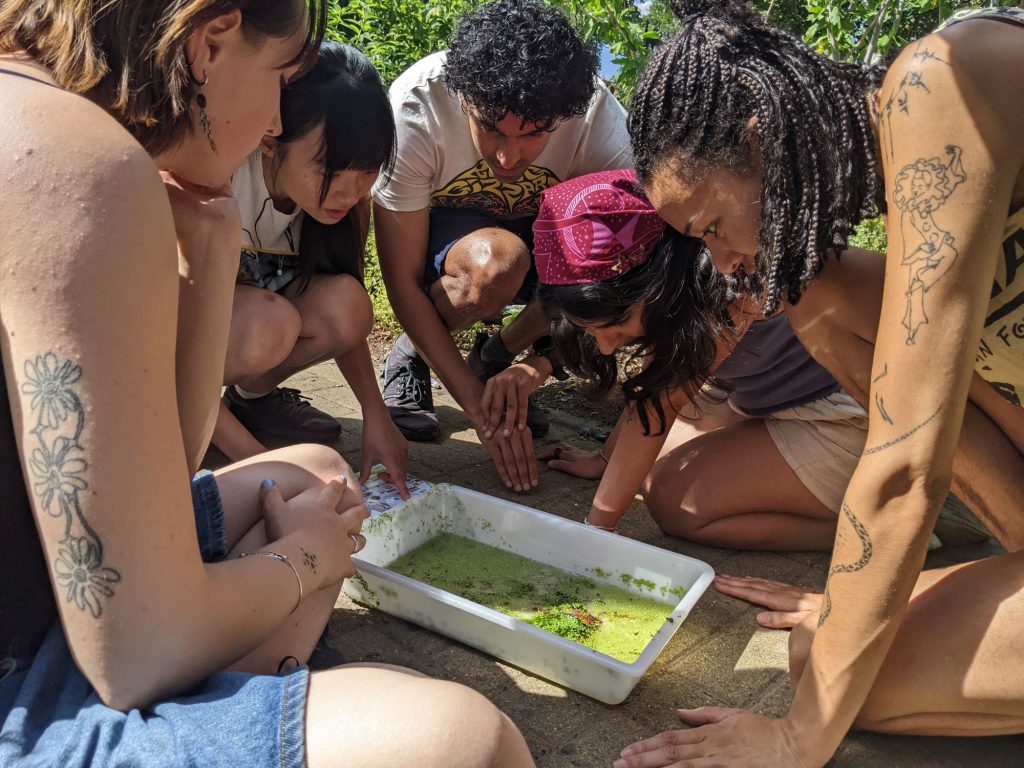
The most successful engagement activity has been the recruitment of our Critter Consultants. This is a group of garden leaders who were already embedded in community growing across London. Our train-the-trainer programme built their skills, deepened their knowledge of biological monitoring and provided paid opportunities to promote ecology to local food growing groups. Over the summer they have run 24 Bug Hunt’s across gardens.
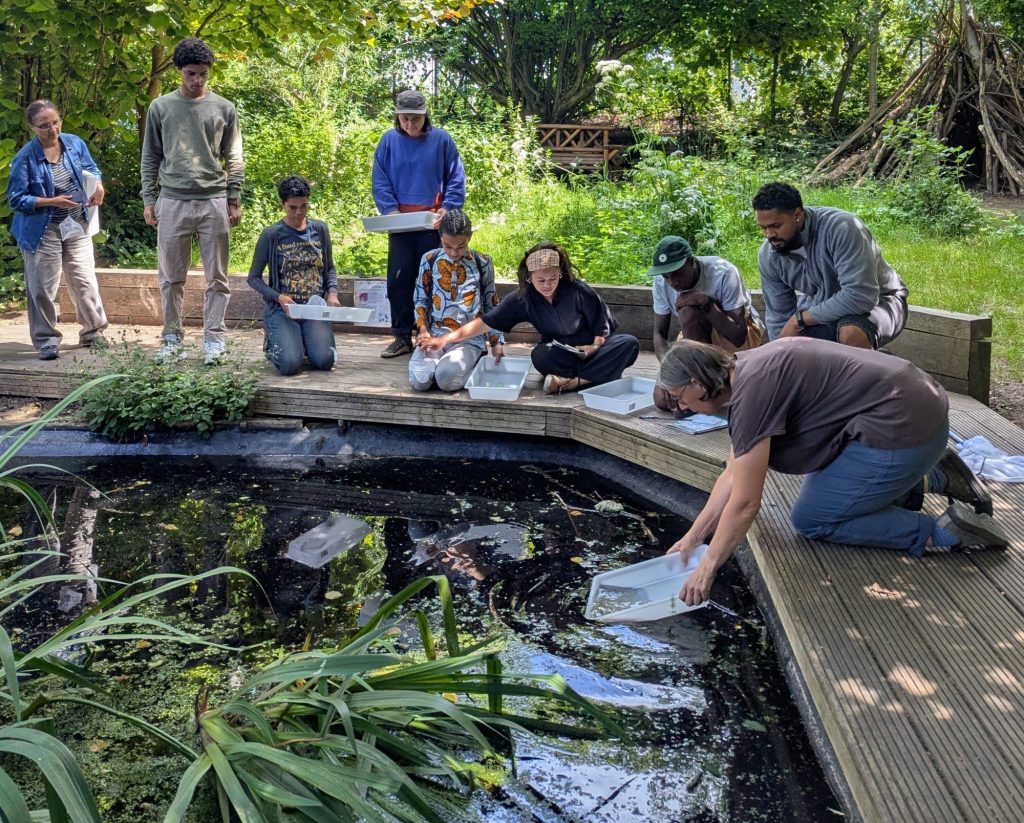
The reality of most food growing projects in London is that they are mostly volunteer led, with busy schedules, especially during the all-consuming summer growing season. Despite a lot of interest and enthusiasm in ecology, there’s not always capacity to pursue it in more depth. To address this we offered bespoke, free workshops led by the Critter Consultants. By the end of the summer, our Critter Consultants will have run 25 bug hunt and pond dipping sessions in 25 gardens across the city, from Deen City Farm in Croydon to Fuel Land Allotments in Walthamstow.
Results
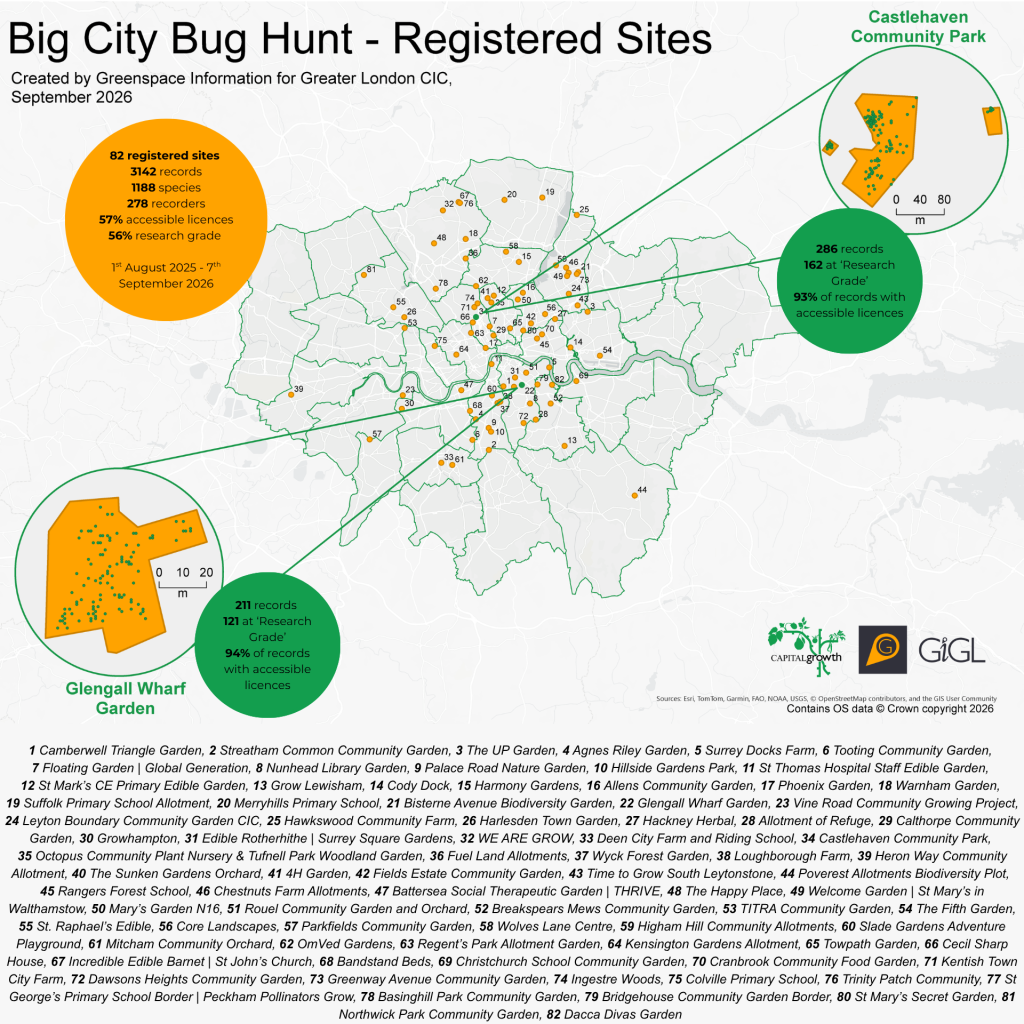
As of the end of August, 82 community growing sites have registered to the project, including flagship sites like Glengall Community Garden, Hackney Herbal and Castlehaven Camden, spanning 23 of London‘s 32 Boroughs.
The Capital Growth iNaturalist project currently contains just over 9,000 records from 1,303 observers, combining contributions from new citizen scientist growers, existing records and users. From the project’s inception at the start of August 2025 to 7th September 2026, growers have contributed 3142 records, from 1188 distinct species.
The most commonly sighted species have been ladybirds, common carder bees (Bombus pascuorum), and buff-tailed bumblebees (Bombus terrestris), as well as some of London’s protected species, including the European common frog (Rana temporaria) and European toad (Bufo bufo).
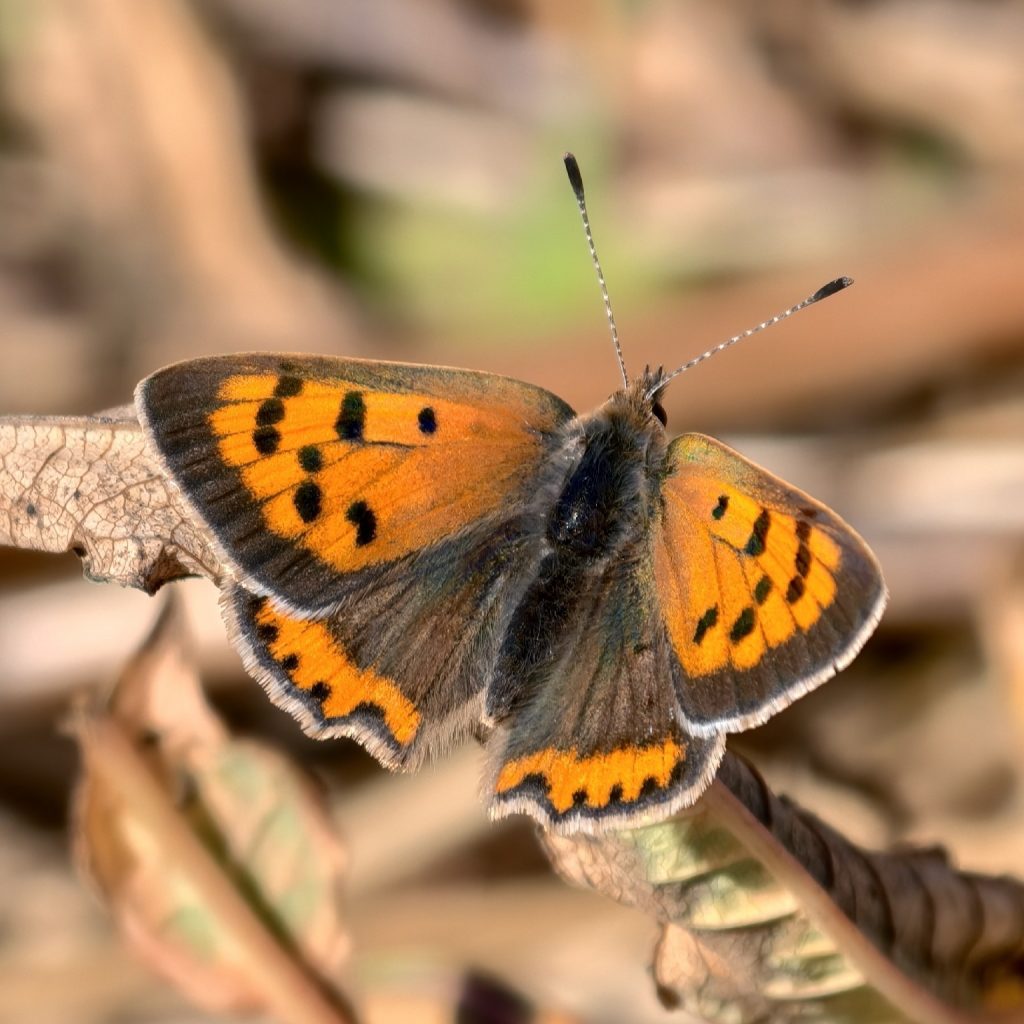
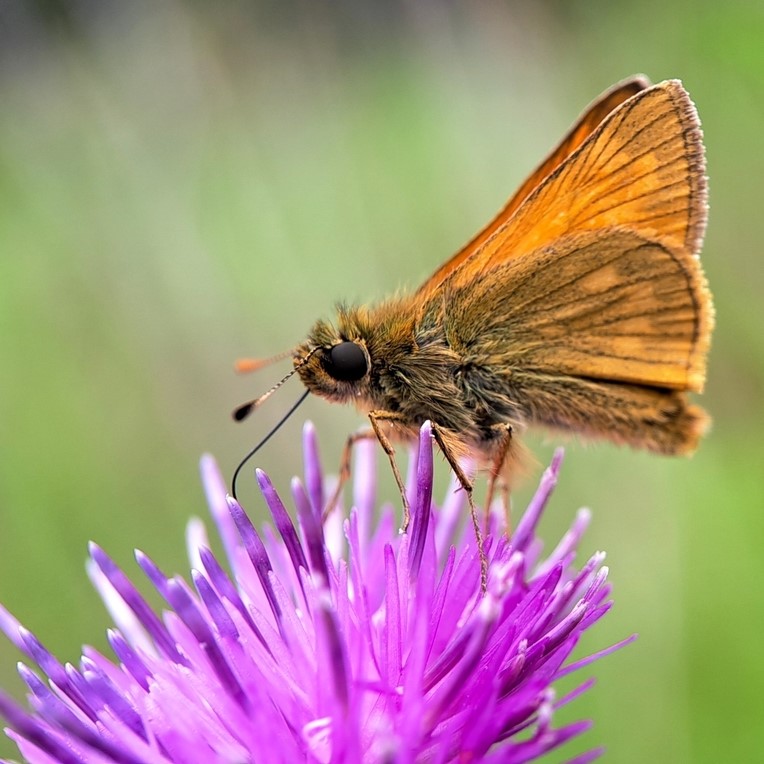
In addition, three priority Lepidoptera species featuring on the Local Nature Recovery Strategy longlist have been recorded: the large skipper (Ochlodes sylvanus), the small skipper (Thymelicus sylvestris) and the small copper (Lycaena phlaeas) – further evidence of the conservation value of community food growing spaces that are offering important sanctuary for these species.
Beyond bugs
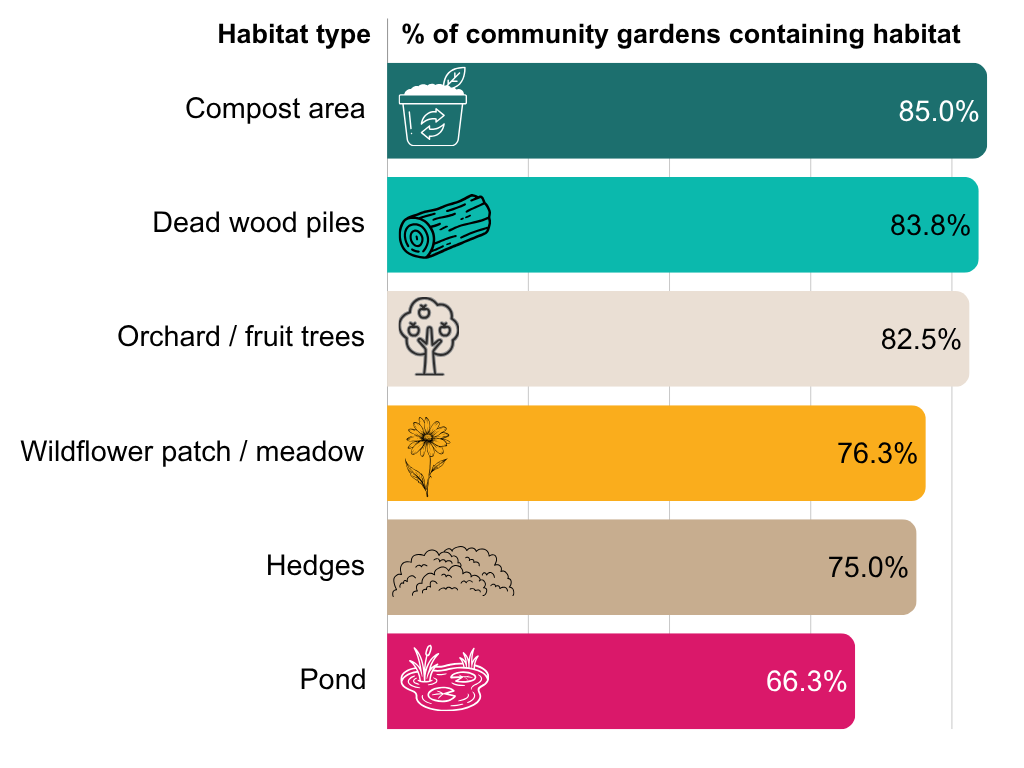
When sites registered, we also collected information about the habitats found across London’s community growing spaces. The results show the patchwork of environments these gardens provide, including bare earth and scrub. The six most common habitats are listed below:
Why urban community growing spaces matter to wildlife
So far, the project has shown how important gardens, orchards and farms are for urban wildlife. From fungi and bugs to bats, these sites support a wide variety of species, and growers are investing in habitats for them. The project has also changed how some growers see and manage their spaces. One grower said they would stop cutting everything back in winter and instead leave wild areas and leaf piles for hibernating insects. Another described the joy of watching the full life cycle of a Southern Green Shield Bug on a chickpea crop after iNaturalist encouraged closer observation. These small changes in attention and management can make a real difference to the wildlife living in community growing spaces.
Each garden was set up as its own collection project, allowing sites to continue monitoring and viewing their results independently of Capital Growth and the wider Big City Bug Hunt. This makes the model sustainable and empowers participants to have ownership over their project site. As more gardeners use iNaturalist, they can continue contributing records to GiGL and build a wider community of participants in citizen science initiatives such as the City Nature Challenge.
A full report will be published in the autumn, bringing together the project’s findings and evaluating citizen science as an engagement tool for food growers. The evidence gathered so far already shows that London’s community food growing spaces are important habitats, and that giving growers the tools to record wildlife can strengthen both ecological knowledge and everyday stewardship.
Check out the project on the Big City Bug Hunt website.