
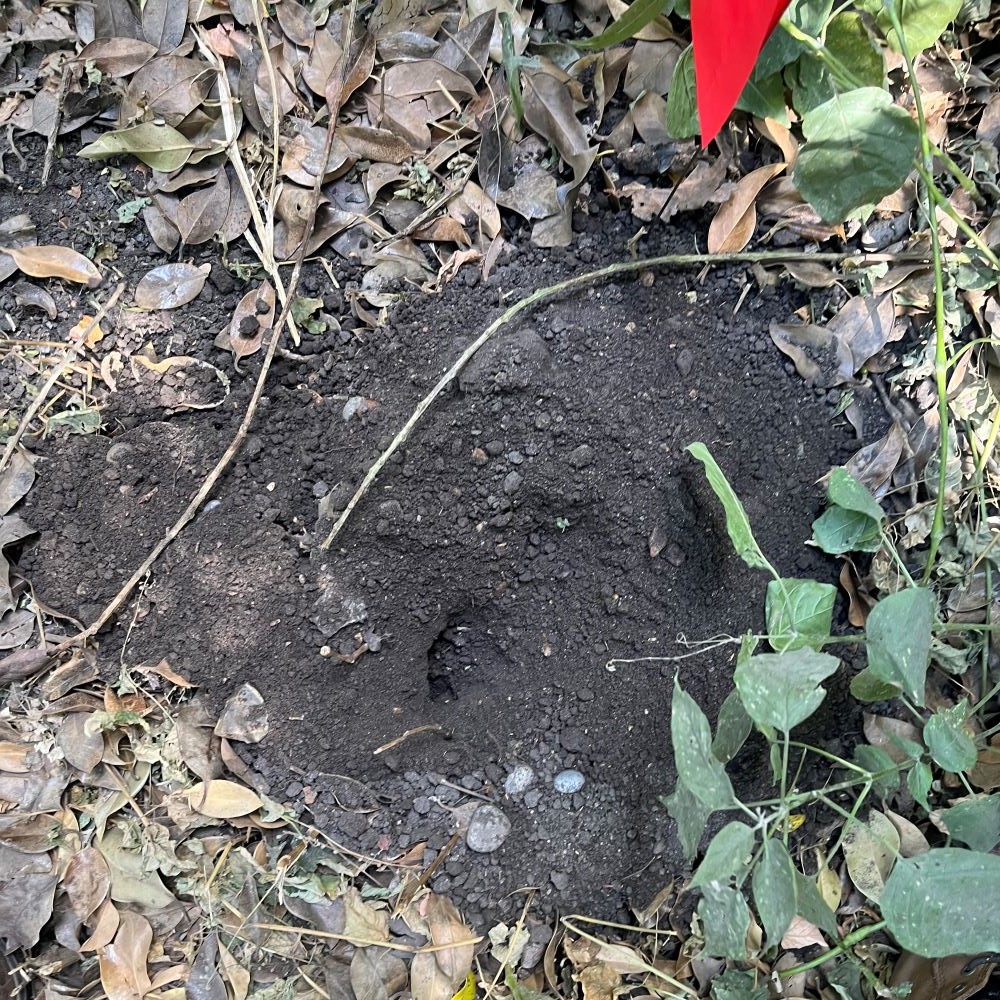
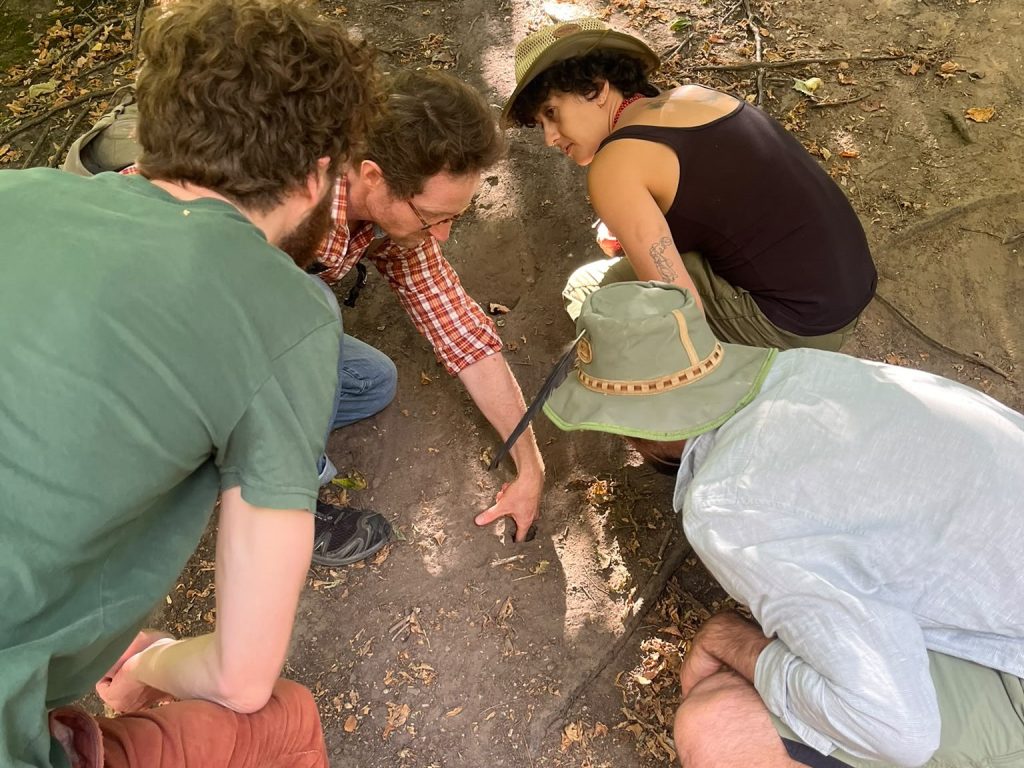
It was 1:18pm on a Sunday at Hampstead Heath as the warm sun pierced the canopy of leaves to mark the walking track with its speckled fingerprints. This track was treated to the usual variety of Sunday visitors: running groups, gossiping dog walkers, families coming back from a picnic and afternoon strollers. As they went about their Sunday afternoon ritual, they all eyed the eclectic clump of Londoners gathered around a small mound of dirt. They were looking intently at the mound and could even be heard debating over it. Some dared to sniff at a small wet patch on the side of the mound.
The Sunday strollers were giving the side eye to the first gathering of the London Wildlife Tracking Group. Where your average walker was seeing a mound of dirt, these trackers were inspecting a mole hill – and the small wet patch, it was fox urine. The leading theory was that a mole had been foraging for worms underground and bringing the dirt above to clear his tunnels as he went. The fox saw this raised mound and scent marked on it, letting other animals know that he was near and this was his territory. These trackers were lucky enough to witness these stories playing out right on the edge of one of the busiest walkways in Hampstead Heath.
How it all began
My name is Jack and I set up the London Wildlife Tracking Group with my partner, Grace, after we came back from a Fundamentals of Wildlife Tracking course in Devon. We were looking for other Londoners with whom we could learn the art of tracking, to spend more time out in our city’s green spaces and to grow a community in what can often be a lonely city.
We were also encouraged to set up the group by our tracking teacher, Marcus Reynerson, who had opened our eyes to the wonders of tracking during his time here from the United States. Marcus is certified as a Professional Tracker in the CyberTracker system and is an evaluator with CyberTracker in North America. CyberTracker is the gold standard evaluator for the tracking community and it is being led by author, naturalist and woodsman, John Rhyder, here in the United Kingdom.
Marcus suggested that we submit the data gathered from our tracking sessions to local London wildlife conservation groups, as many groups do in the U.S. This led me to walking around with a clipboard holding the GiGL excel spreadsheet and taking note of the various animals signs we found – and you wouldn’t believe the variety of our records…
How our tracking sessions develop
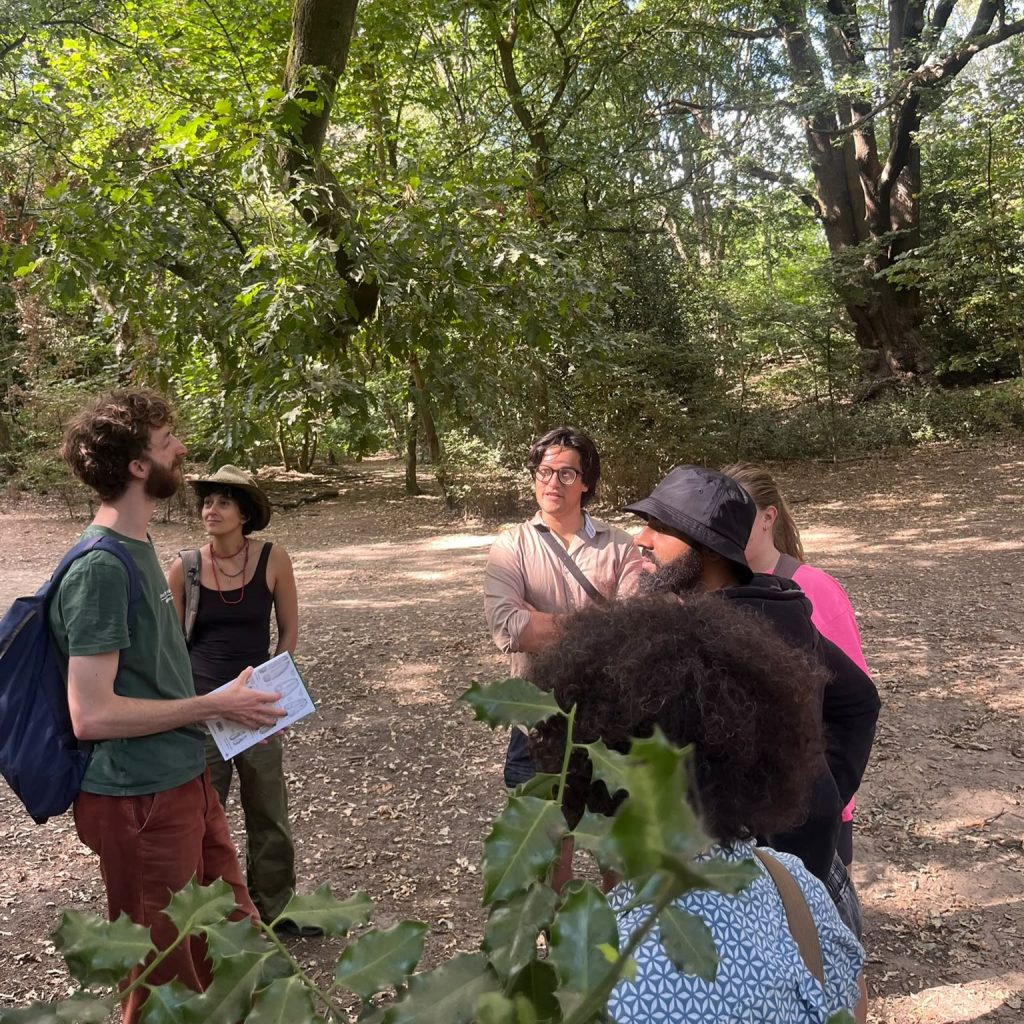
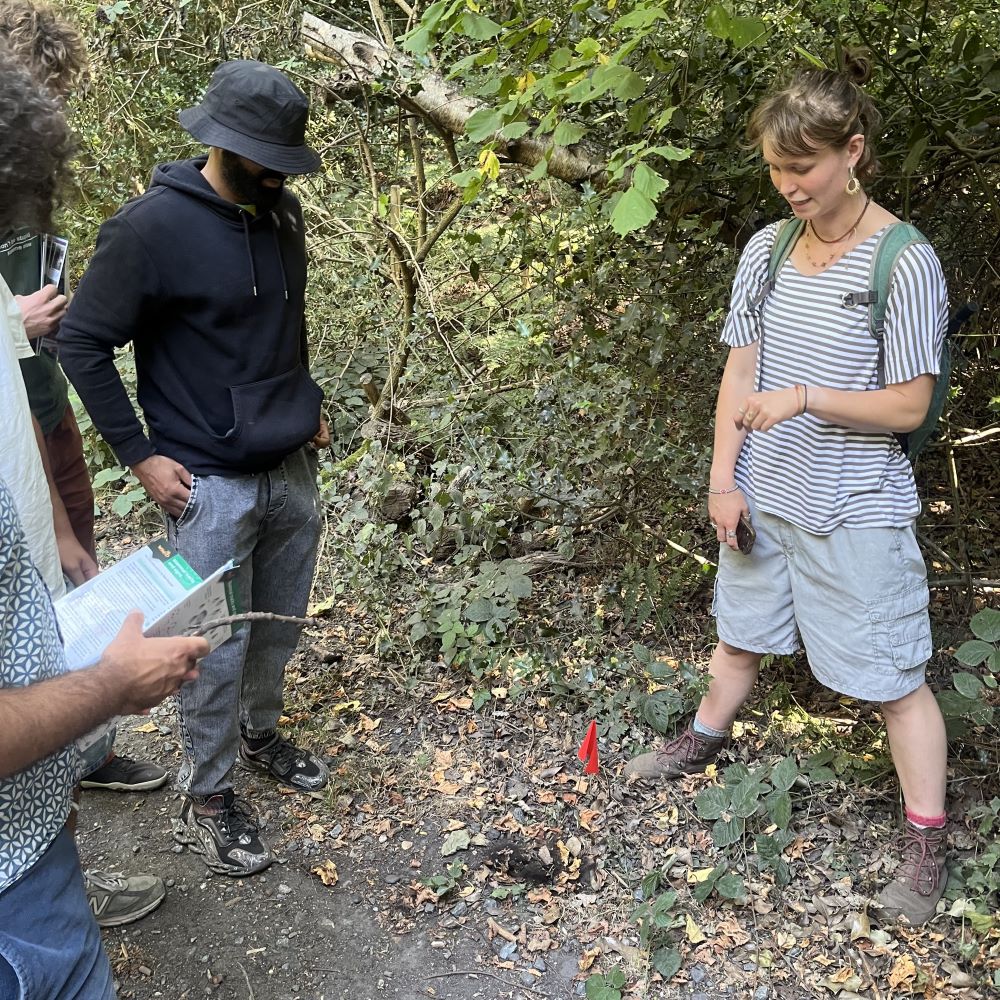
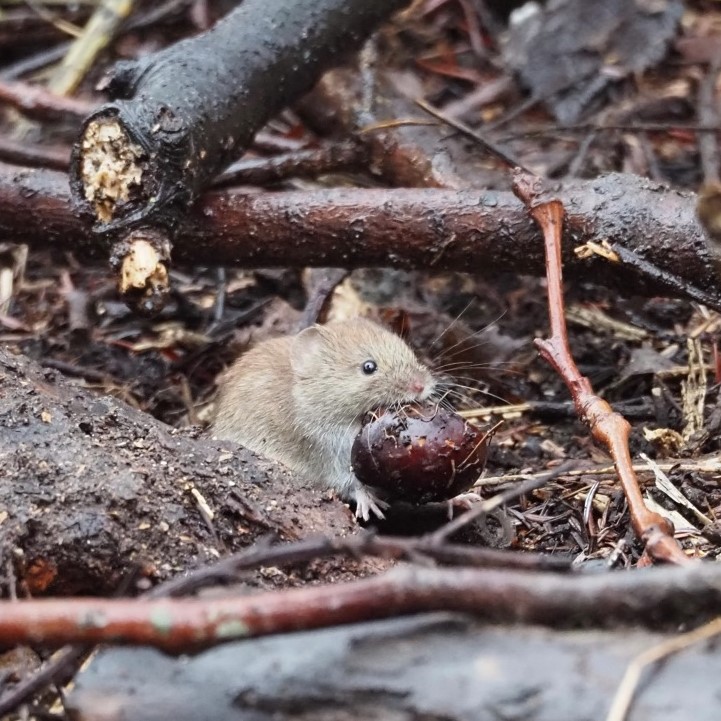
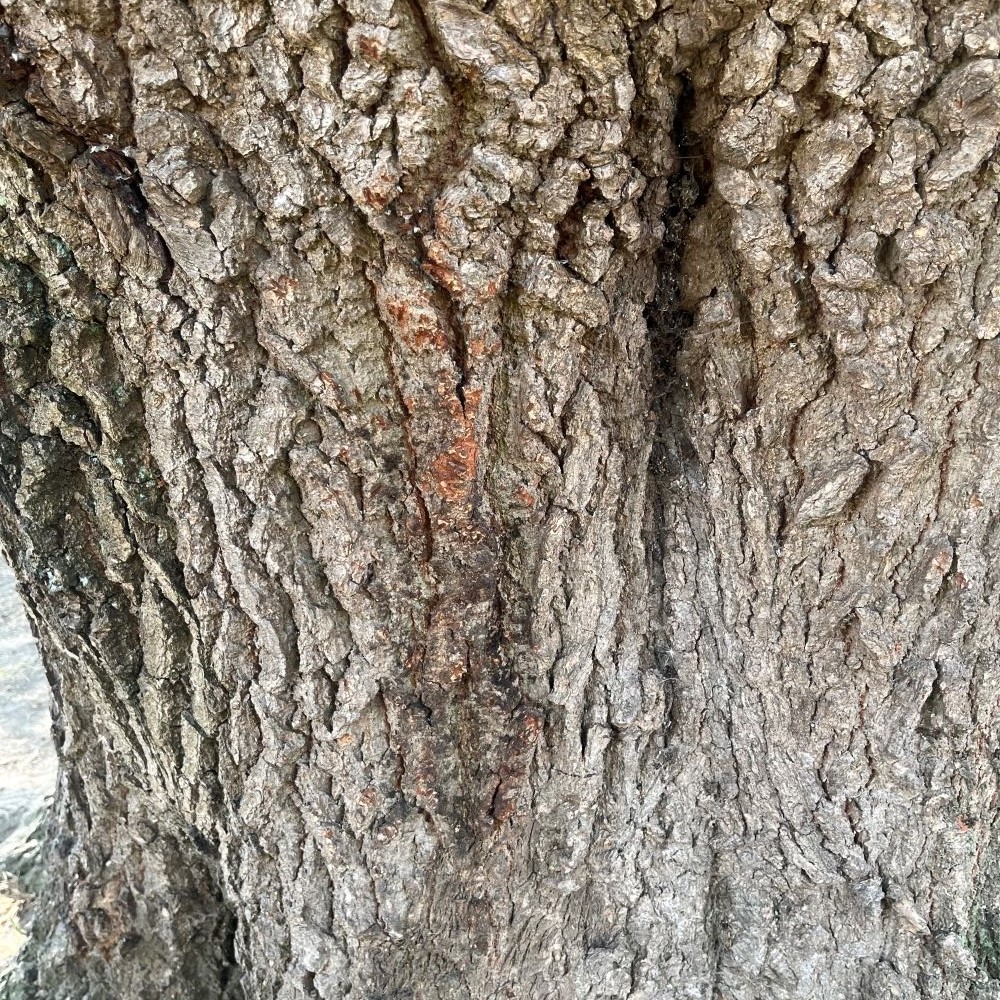
For ninety minutes our group travelled just 100 metres across the park’s walkway, stopping constantly to inspect the natural mysteries we found. After our fascination with the mole hill ended, we walked a few steps to find a bushel of hollowed out hazelnut shells that we hypothesised was a bank vole feeding site. We could determine this due to the markings left on the shells as each species leaves a different signature as they feed. For example, a grey squirrel will generally split the shell in half near perfect while a bank vole creates a hole and nibbles the insides. After this we came across a tall oak tree where the bark was chipped off at head height – classic signs of territorial markings from the grey squirrel. Just at the base of the tree, sitting on a raised root, we identified fox scat which was packed with blackberry seeds.
It was a treasure trove of natural stories and an instant barometer for the ecosystem at Hampstead Heath. At a glance, we were able to surmise some of the species that are active in the given area and what their patterns of behaviour are. A tracker I know who stewards a rewilding project in Devon swears by the art of tracking as a way of understanding his land’s ecosystem and monitoring increases in biodiversity. In our urban backyard, our tracking skillset was helping us to develop our own understanding of and relationship to London’s wildlife.
As a tracker who is unacquainted with data surveys of the natural world, I’m curious as to how this skill could complement modern methods of data collection. From the outset, I can see how surveys using camera trapping could be well aided by tracking skills as animal sign might be a good indicator as where to place a camera trap. With deer rutting season upon us, wouldn’t it be great to know how to identify where this occurs and set up a camera trap? I’m curious to hear from the community about the ways tracking is or could be used for data collection.
Join us
The London Wildlife Tracking Group is open to anyone who is interested in learning the art of tracking, to meet people and spend more time out in our city’s green spaces. Our group is open to complete beginners, in fact, most of those joining our first meet had never tracked before.
So if you’d like to share your thoughts with us, or if you’re just an interested nature enthusiast, we warmly invite you to join us at our next London Wildlife Tracking Group meet. It’s entirely free and takes place on the last Sunday of every month at 1pm with this month’s meet on 25 October. Send me a message on WhatsApp (+61 424 828 127) and I’ll add you to the Group. I hope to see you on the trail soon!