
How one East Finchley recorder is revealing the hidden night-life of Barnwood – one moth at a time.
This article has kindly been re-published from Linda’s original article on the Urban Forest Collective website: https://urbanforestcollective.org/news/
On a summer morning in Barnwood, while most of East Finchley are still waking up, one local naturalist may already be several hours into identifying, logging and releasing the moths that visited his trap overnight. Some nights bring just a handful. In high summer, the count can rise to 70 or 80 moths. Across a year, the numbers run into the thousands.
Leo’s fascination began more than six decades ago, on the path to a family allotment lined with nettles and wildflowers. “It was always covered in butterflies,” he remembers. At secondary school, he and a friend even dreamed of starting a butterfly farm – an idea that now sounds ahead of its time, given the popularity of butterfly houses today.
Leo’s serious moth recording began later, after holidays in Norfolk and time spent at Holme-next-the-Sea nature reserve, where moth traps were part of the landscape. In March 2021, Leo bought his first trap. Since then, Barnwood in North London, where he now lives, has grown to become a small but remarkable constant monitoring site for moth life.
What happens inside a moth trap?
Leo’s trap is movable rather than permanent, using blue actinic light to attract moths. Older traps often used mercury vapour lights, but today many recorders use LEDs. The principle is simple: moths are drawn to the light, then settle into the trap, Leo uses old egg cartons which give them somewhere safe to rest until morning.
In the morning, each moth is carefully moved into an observation pot for identification. Some are instantly familiar; others require photographs, memory, reference checks, or help from the wider moth-recording community. Once identified and recorded, they are released safely away from the trap, so they are less likely to return immediately.
“Some moths hit the trap with a thud,” he says, especially larger species such as the Large Yellow Underwing. Others are more delicate, including the tiny micro-moths that have become one of his growing interests.
From hobby to citizen science
Every sighting is logged, including the scientific names needed for reporting. The records are sent to GiGL, adding Barnwood’s observations to the wider picture of urban biodiversity. GiGL has also recently worked with Leo to make his recording process easier, creating a bespoke spreadsheet and process for him.
Leo’s consistency matters. Some recorders set traps occasionally, but Barnwood is monitored regularly through most of the year, making it a useful point of comparison over time. The season usually begins when night temperatures rise above about 9°C, often around mid-February, and can continue almost until Christmas.
The figures already tell a striking story, with thousands of specimens, and hundreds of different species identified each year. The 2026 season, he says, has been “mental” because of the heatwave, although final totals are not available at time of writing.

The Barnwood effect
Barnwood, a forest garden, has not been planted specifically as a moth or butterfly garden, but the insect population benefits from nature-friendly planting and from allowing useful wild plants – including thistles and other nectar sources – to grow. A mix of trees, flowers, rougher “rewilded’ edges and food plants that help support both adult insects and their caterpillars.
Because moths often depend on specific host plants, even small patches of suitable habitat can make a difference. One visiting moth from southern Africa, recorded two years ago, was notable because its caterpillars feed on a plant found at Barnwood – possibly bristly oxtongue.
For now, Leo is cautious about drawing any conclusions. Barnwood’s records are valuable, but habitat health, weather, migration, recording effort and growing identification skills all influence the totals. “It’s not prudent to make assumptions,” he says. “We need someone to do a proper research project.”
Small moths, big discoveries
As his confidence has grown, so has his attention to micro-moths – the tiny species that are easy to overlook. “As I have got more experience,” he says, “I am actually identifying the smaller jobbies I may earlier have ignored.”

One example is Tachystola acroxantha, a small moth originally from Australia that has become a regular early-season visitor. Another memorable moment came when he recognised a tiny unidentified moth during an online lecture by a British Museum expert. The species, Anarsia innoxiella, had only recently been noted as something new to science in Britain.
That is part of the fascination: even a small community site in North London can turn up records that connect local observation with much larger ecological changes.
Visitors from the south – and signs of change
Some moths seen at Barnwood are migrants, helped by favourable winds and weather patterns. Others are species once associated more strongly with southern parts of the UK but now becoming more familiar in London and the Southeast.
The Jersey Tiger is one of the most exciting examples. Once a rarer visitor, it is now well established in parts of the region. It is also a day-flying moth, large and colourful enough for visitors to spot and enjoy without needing a trap.
Not every unusual sighting means a simple climate-change story, but the records help build the evidence. Weather, food plants, wind direction and seasonal heat all play a part in what arrives, survives and breeds.
The moths that stop you in your tracks
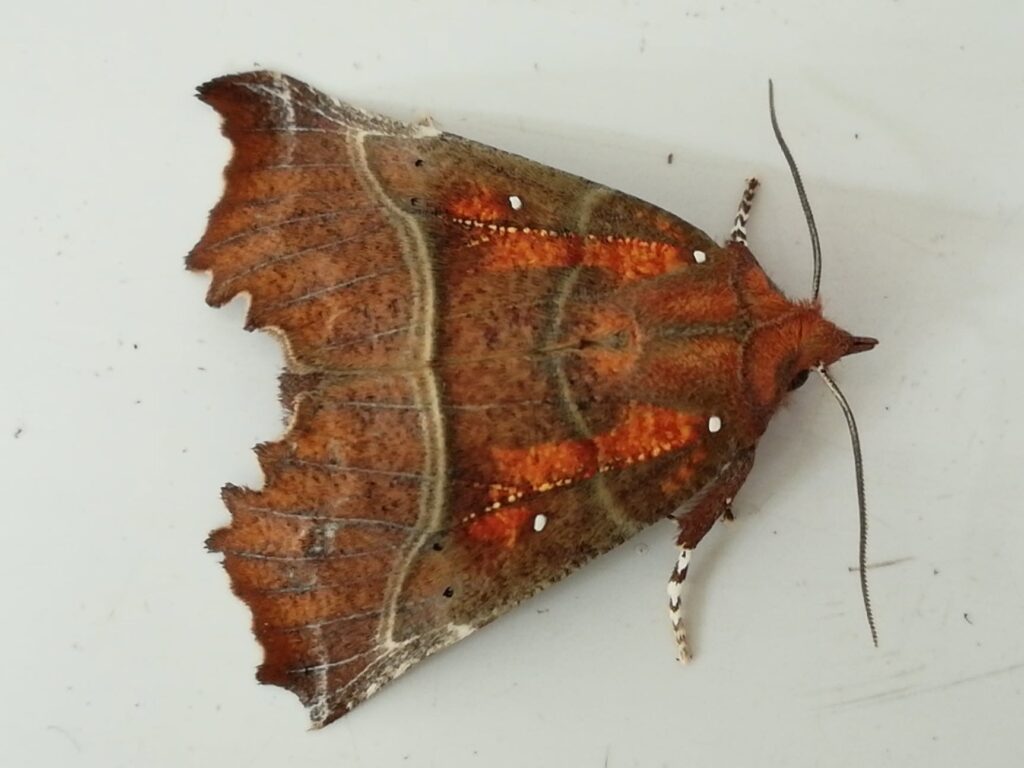
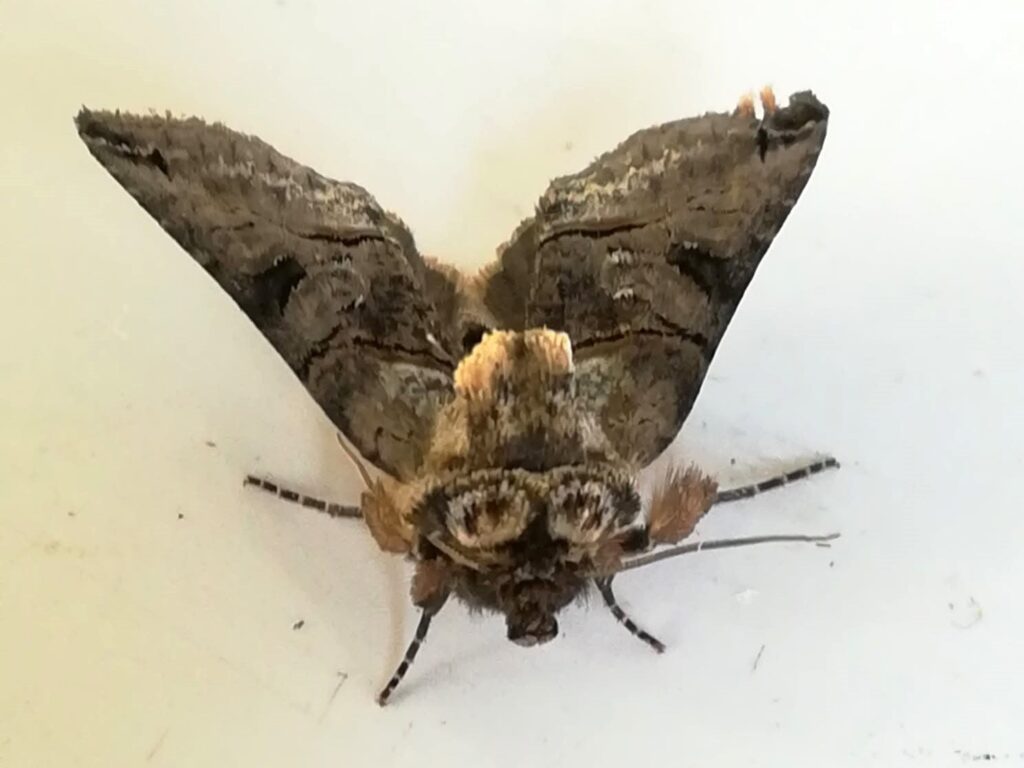
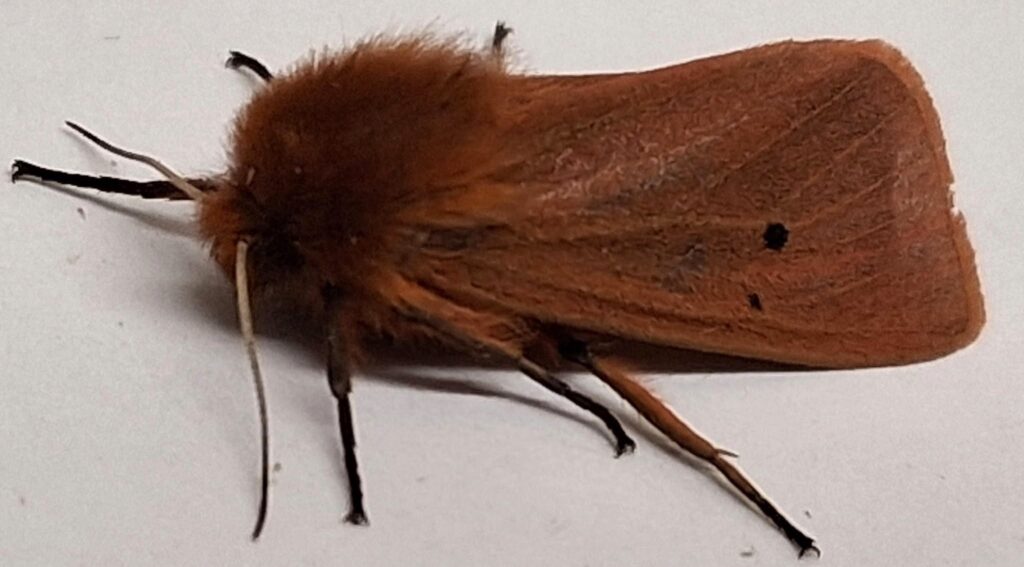
Among thousands of records, a few species stand out: the Herald, the Spectacled Moth, Angle Shades, Buff-tip, Oak Beauty, Peppered Moth, Old Lady, Black Arches, Double-striped Pug, Twenty-plume Moth, Large Ranunculus, Maidens Blush, and many more.
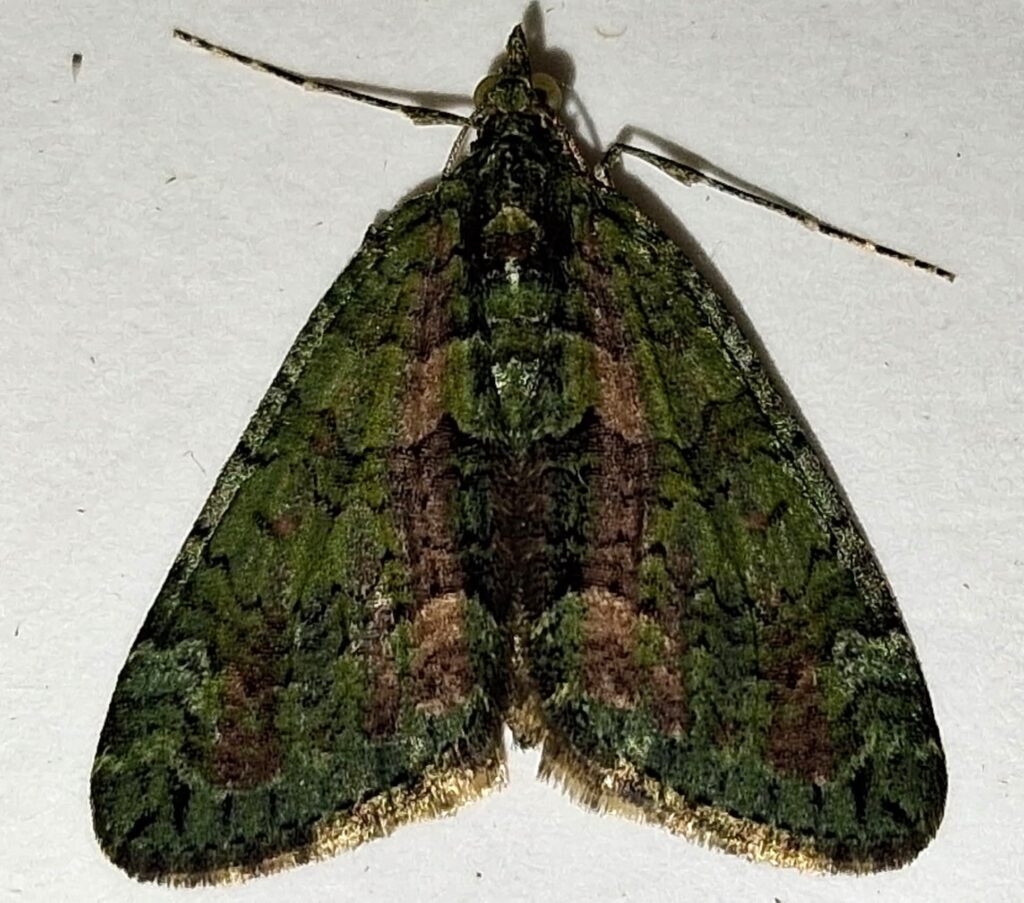
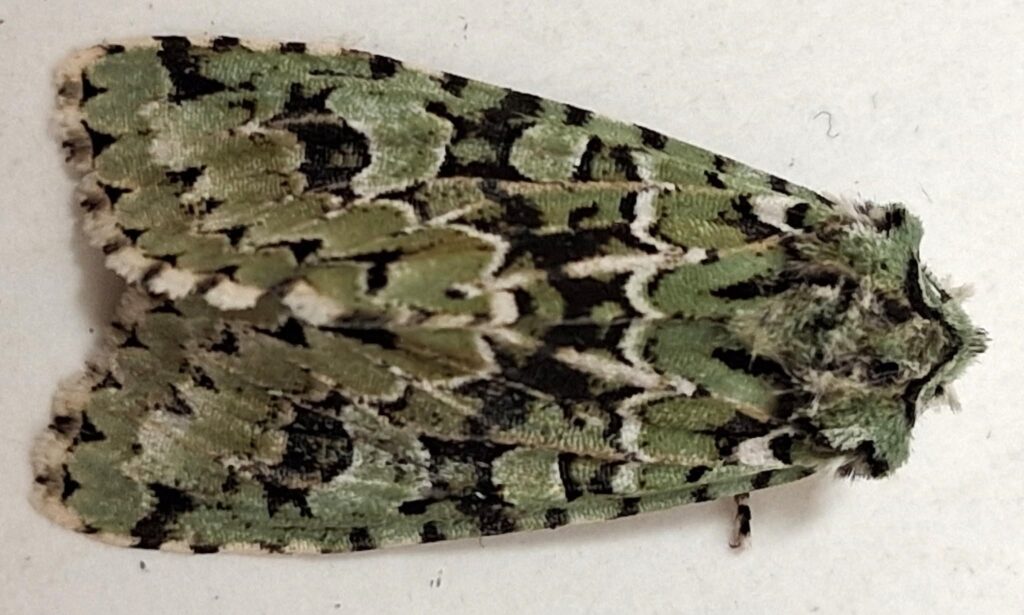
But if he had to choose one that took his breath away, it would be the Merveille du Jour: a green, black and white moth whose name means “wonder of the day”. He has only seen one at Barnwood. “They are stunning,” he says.

Why moths matter
Moths are often overlooked because so much of their work happens after dark. Yet they are vital pollinators, a food source for birds, bats and other wildlife, and useful indicators of the health of local habitats. They also suffer from a public relations problem.
Many people think first of clothes moths, even though only a handful of species are responsible for damage indoors. Once people see the variety, beauty and ecological importance of moths, attitudes often change. “People are not scared of moths, especially when you take time to explain things,” he says. “People become fascinated.” Neighbours now bring him insects to identify, and a good photograph can spark conversations that lead to wider curiosity about nature.
What can local people do?
Simple first steps to create places where insects can feed, breed and shelter:
- Don’t rush into buying new plants – just observe
- Slow down and notice what appears in your garden, street, balcony or local green space
- Notice behaviours – which flowers attract insects? Which leaves show signs of caterpillars? Which species appear at different times of the year?
- Be thoughtful in your green space: grow nectar-rich flowers, tolerate some wild plants, reduce pesticide use, leave parts of the garden a little less tidy, and support a mix of native trees, shrubs and grasses.
For Leo – Barnwood’s moth man – the reward is not just the occasional rarity. It is the daily act of paying attention and the growing record of a hidden world that has been there all along, fluttering through the dark above N2.
“If there is one thing we could all benefit from it is spending time watching nature”, said Leo.
Leo is the Chairman of Barnwood N2. For more moths see https://www.facebook.com/OurBarnwood/