National engagement matters. It’s something we take seriously at GiGL – and something we’re really quite good at. In a data landscape that is continually evolving, collaboration and continuous learning with peers helps us stay relevant, maximise our impact and improve our services. Co-ordinated approaches across the sector ensure consistency, efficiency and mean progress is shared.
Our membership of two national networks makes this possible:
- The Association of Local Environmental Records Centres (ALERC), which provides a national voice and standards for Local Environmental Records Centres, and
- The National Biodiversity Network (NBN), which is a UK partnership enabling the sharing of biodiversity data.
GiGL and ALERC:
ALERC provides the professional framework that underpins how Local Environmental Records Centres (LERCs) operate. Its accreditation scheme defines what high-quality environmental information services look like – from data management and governance to customer service and public engagement. Working to shared professional standards means LERC services are trusted and, despite our varying set-ups, common services are recognisable across the UK. ALERC is the unified voice for LERCs on the national stage. A recent example is the representation to DEFRA of the incompatibility between LERC business models and their request for all Local Nature Recovery Strategy data to be released under an open government licence. ALERC met key personnel and drafted a mutually agreed proposal which allowed the use of LERC data for the benefit of nature recovery without any detrimental effect on LERC services.
Regular webinars, workshops and its national conference facilitate the exchange of expertise, enabling ongoing training and skills development of LERC staff. GiGL has been a member of ALERC’s Business Development Group and is currently an active member of the IT and Tech Working Group, which in the last year has provided guidance on changes and developments to shared database systems, bespoke reporting for Neighbourhood Plans and State of Nature Reports, and the development of online mapping platforms, the latter of which was led by GiGL staff. We benefit from regular Lunch & Learn webinars, through which knowledge is shared. Collaboration between LERCs has allowed the development of shared systems such as the Habitats and Land Use tool, used by GiGL and other South-East LERCs.
The network has a strong culture of mutual support. ALERC provides a trusted forum to learn, ask questions and share solutions. GiGL is an active contributor on a lively Knowledge Hub peer-to-peer forum. This allows informal sharing of ideas and discussion of everything from new challenges and legislative changes to new digital tools.
GiGL and the NBN:
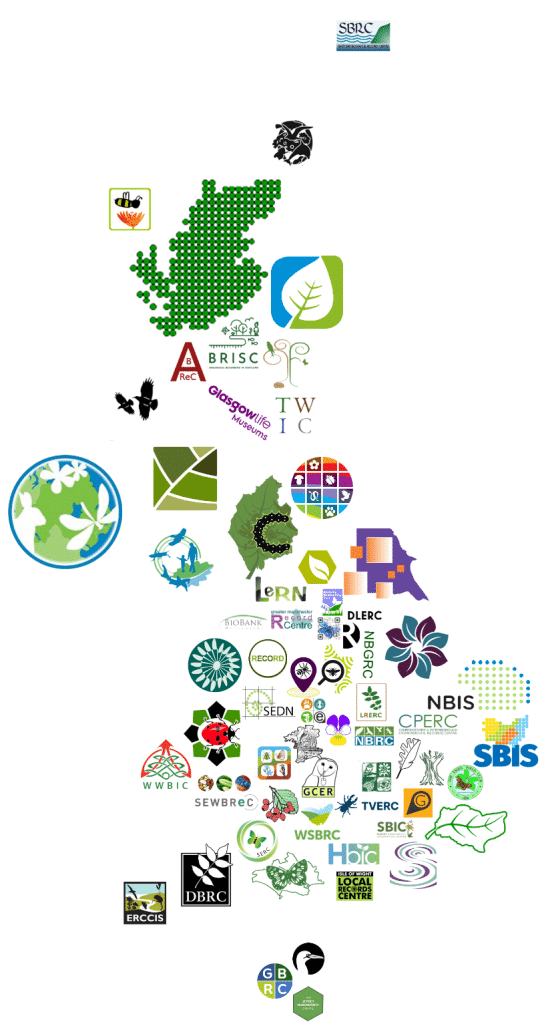
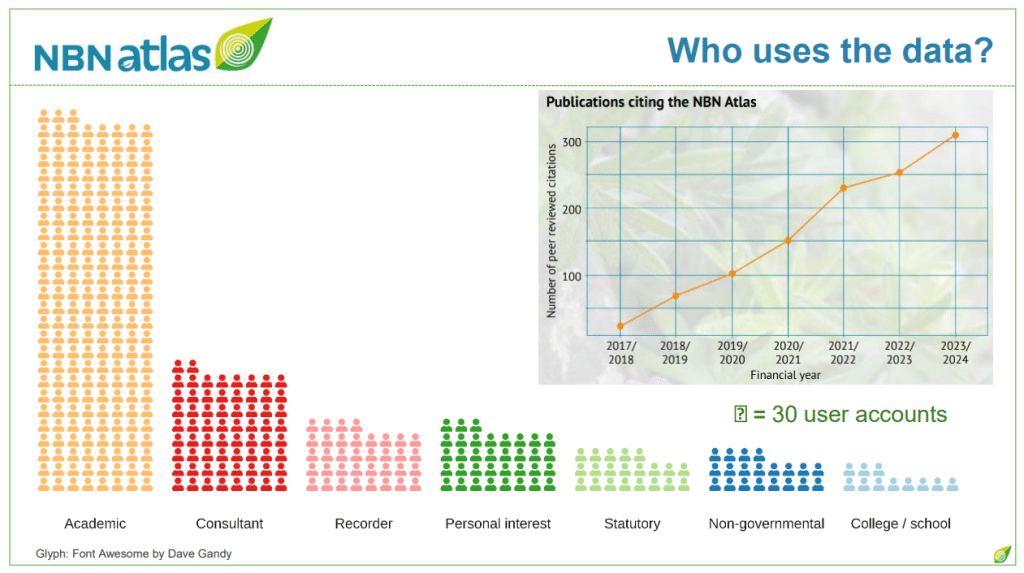
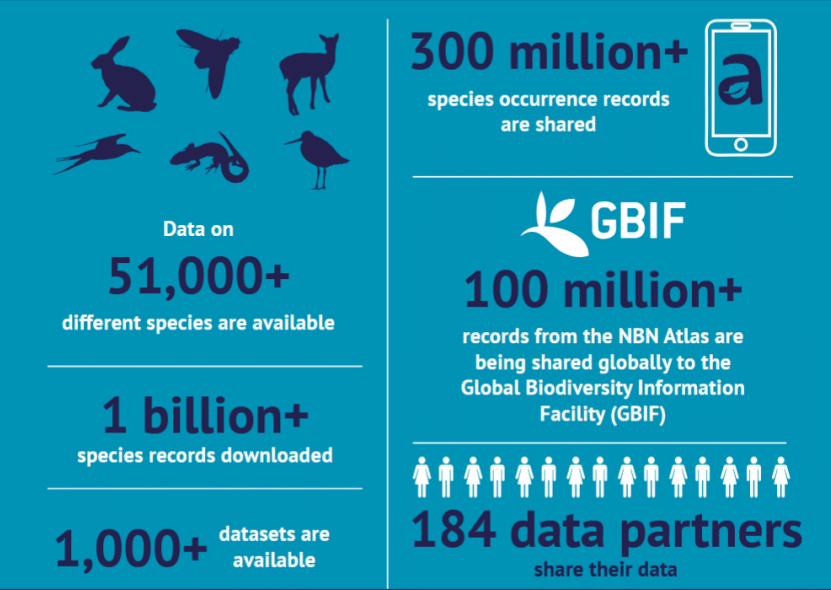
Whereas LERCs work within regional geographic remits, the NBN aims to make data work for nature at the UK scale. Through national data sharing and collaboration, biodiversity data are brought together within the NBN Atlas to form the UK’s largest repository of publicly available biodiversity information. There are restrictions on the use of NBN Atlas data, and often datasets are available at a lower resolution than those from LERCs directly, but the national resource brings benefits for highlighting data availability and for regional/national projects, a primary one being for scientific research.
There are various data pathways into the NBN Atlas, including bespoke options from GiGL that are all based on the national standard we work to. Get in touch with one of our Community Officers to discuss what might be best for your records. Many recording apps also feed into the Atlas, details of which are available in our article reviewing available recording apps.
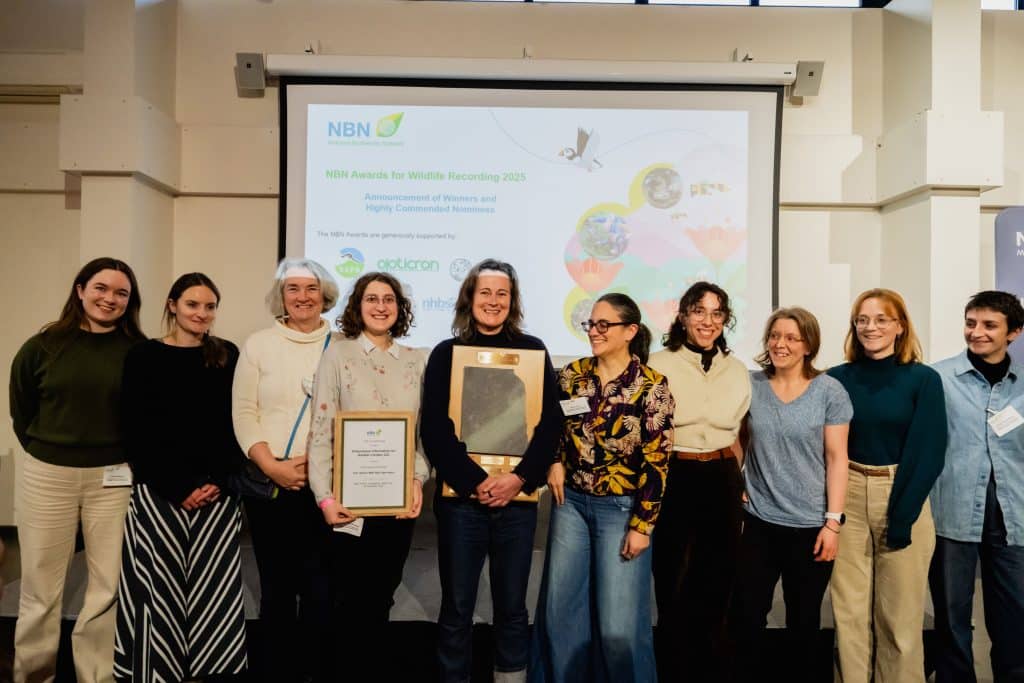
The NBN Trust is the charity responsible for guiding and supporting the development of the Network, with a membership that includes numerous UK wildlife conservation organisations, government and national agencies, environmental bodies, Local Environmental Record Centres, and a wide range of voluntary groups. In a similar way to ALERC, the NBN Trust provides strategic influence and representation for the use of biodiversity data as well as training to members via a monthly newsletter and annual conference, including topics such as national strategies and open data policies. The NBN Trust is an advocate for appropriate open data, with the John Sawyer Award recognising those who make a valuable contribution to open biodiversity data in the UK – won by GiGL in 2025.
The NBN provides a standardised framework for how sensitive species data should be assessed, managed and shared, ensuring biodiversity data can support decision-making while preventing environmental harm. It defines which species are environmentally sensitive; those for which if data were released there could be adverse effects on species or habitats, for example the nesting sites of rare birds of prey. It also advises how these species’ sensitivity may vary geographically across the UK.
Our CEO Mandy has worked at GiGL since it’s early days as London’s Biological Recording Project. She shares these decades of experience in her additional roles as Chair of ALERC and member of the NBN Trust’s Board of Trustees. In these positions she advocates for the use of high-quality local biodiversity data at a national level, contributes to sector-wide initiatives such as Biodiversity Net Gain, and leads collaborative work that strengthens the visibility and influence of LERCs across the UK.
We’re lucky we have Mandy representing LERC interests, and the insights she shares from national discussions helps GiGL remain at the forefront of developments. We’ll continue to stay relevant by staying connected to national networks such as ALERC and the NBN. And, we’ll stay committed to using what we learn for the benefit of nature in Greater London.